Bali's Spiritual Pathways: Temples and Tranquility
Trip Express•Mar 15, 2026•5 min read
“Discover Bali's hidden spiritual sanctuaries and experience the island's rich cultural heritage through its lesser-known temples. Explore the sacred sites of Pura Luhur Batukaru and Pura Gunung Kawi, and embrace the tranquility of Pura Taman Saraswati in Ubud. This guide offers insights into Balinese customs, dress codes, and strategic timing for a respectful and enriching visit.”
Bali's Spiritual Pathways: Temples and Tranquility
The Hook
In the midst of Bali's lush landscapes and bustling beaches lies a quieter, more contemplative world—one shaped by centuries of spiritual devotion and architectural wonder. Bali's temples, or 'pura', are not merely places of worship but living testaments to the island's vibrant cultural tapestry. Unlike the well-trodden paths leading to the famed Tanah Lot or Uluwatu, there exists a network of lesser-known sanctuaries that offer genuine insight into Balinese spirituality. These hidden sanctums are where rituals preserve the island's soul, offering a glimpse of Balinese life that is both grounding and transformative.
"In Bali, spirituality is woven into the everyday; it is not an escape from reality but a deeper engagement with it."
Discovering these temples is akin to stepping into another realm, where time slows and the air is thick with incense and reverence. The island's spiritual pathways are not defined by grandeur but by their subtle nuances—a delicate balance between the seen and the unseen, the spoken and the silent.
Comments
Highly Anticipated
- Be the first to share your thoughts!
No comments yet
Be the first to share your thoughts with the community!
Leave a Reply
Keep Reading
Recommended Stories
The Context
Bali, often dubbed the 'Island of the Gods', carries a legacy steeped in Hindu traditions. Though the island's religious tapestry includes Buddhism and animism, Hinduism remains the predominant force shaping its spiritual landscape. The inception of Hinduism in Bali dates back to the early centuries of the Common Era, brought over by Indian merchants and eventually solidified by Javanese influence during the Majapahit Empire.
Central to Balinese Hinduism is the concept of 'Tri Hita Karana', a philosophy advocating harmony between humans and the divine, nature, and each other. This philosophy permeates daily life and is manifest in the numerous ceremonies and offerings ('canang sari') you’ll encounter. Temples, as the physical embodiments of this belief system, are hubs of community life. However, the essence of these temples extends beyond their physical boundaries—they are focal points for the island's intangible cultural heritage.
While visitors often flock to the iconic landmarks, it is the lesser-known temples, like Pura Luhur Batukaru and Pura Gunung Kawi, that provide a deeper understanding of Balinese spirituality. These sites, often set against dramatic backdrops of lush forests and terraced rice fields, serve as spiritual retreats for those seeking more than just a photographic moment.
The Atmosphere
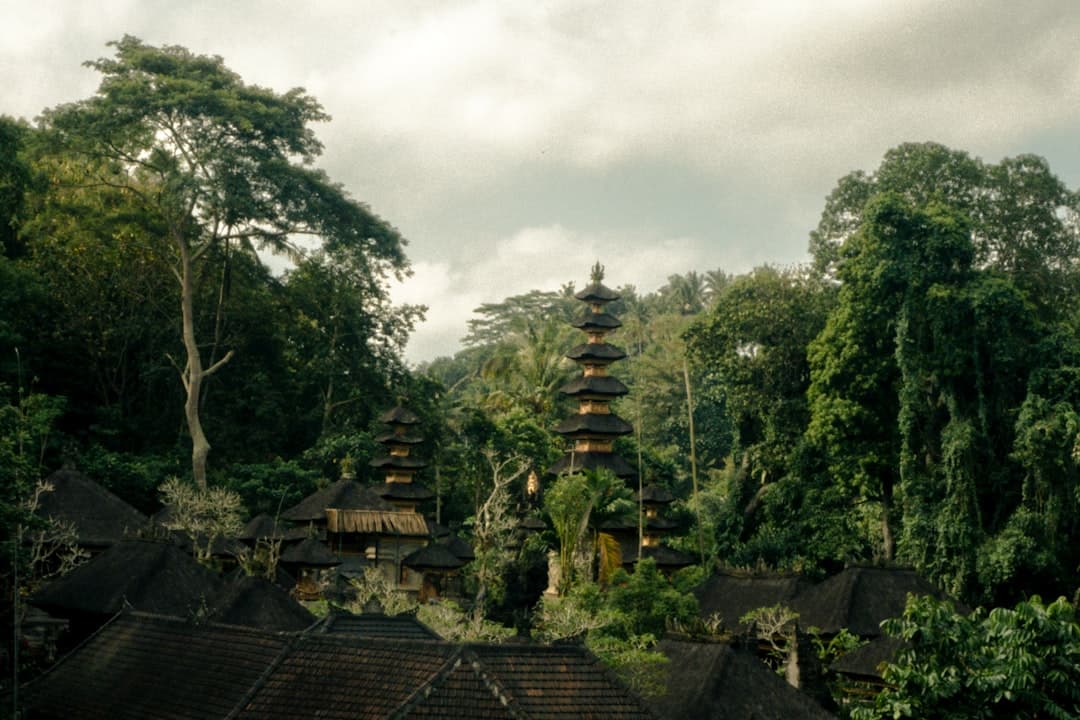
Walking through the grounds of a Balinese temple is a sensory journey. The architecture, characterized by intricate carvings and tiered pagodas ('meru'), speaks to a deep connection with the divine. Each temple is divided into three main courtyards, symbolizing different stages of consciousness and spiritual development.
At Pura Luhur Batukaru, located on the slopes of Mount Batukaru, the atmosphere is one of serene isolation. This temple, dedicated to the mountain gods, is enveloped by dense rainforest, with mist often hanging in the air, lending an ethereal quality to the surroundings. Here, the sounds of nature—chirping birds, rustling leaves—merge with the soft chants of devotees, creating a symphony of tranquility.
"The architecture of Balinese temples is not just about aesthetics; it is a dialogue between the earthly and the divine."
Pura Gunung Kawi, another gem tucked away in the heart of Ubud, is distinguished by its ancient rock-cut shrines. Approaching the temple, visitors descend through terraced rice paddies, the journey itself a metaphor for leaving behind the mundane world. The temple's ten rock shrines ('candi') are believed to be memorials to the 11th-century Balinese royalty, a testament to the island's rich history.
The temple experience is incomplete without witnessing a 'puja' ceremony. These rituals, often led by a 'pemangku' (priest), are immersive experiences where incense smoke curls into the air, and the rhythmic sound of the 'gamelan' orchestra resonates through the temple grounds.
The Insider's Gem
Among the myriad temples dotting Bali's landscape, Pura Taman Saraswati in Ubud is a jewel often overlooked by the hurried traveler. Dedicated to Saraswati, the goddess of knowledge and the arts, this temple is renowned for its tranquil lotus pond—a visual metaphor for purity and enlightenment.
"At Pura Taman Saraswati, the delicate balance between art and spirituality becomes a meditation in itself."
The temple's unique charm lies in its dedication to the arts. Every week, traditional Balinese dance performances transform the temple courtyard into a stage, where stories of gods and heroes are brought to life. These performances, accompanied by the enchanting sounds of the 'gamelan', offer an intimate glimpse into Balinese culture.
For those seeking a deeper connection, visit during the quieter hours of the morning. The soft morning light casts a golden hue over the temple, and the air is filled with the subtle fragrance of blooming lotuses. Engage with the locals, who often visit for morning prayers, and you may find yourself invited to participate in the offerings, a gesture that transcends language.
The Concise Guide
Social Norms
Understanding Balinese customs is crucial for a respectful visit. When entering any temple, it is essential to wear a 'sarong' and a sash, both of which symbolize respect and humility. These are often available at the temple entrance.
Dress Codes
Modesty is key. Shoulders and knees should be covered, and shoes removed before entering the temple grounds. This dress code applies to both men and women.
Strategic Timing
To experience the temples without the throngs of tourists, early mornings or late afternoons are ideal. During these times, the temples are quieter, allowing for a more personal connection with the space.
"Timing is everything; to truly absorb the essence of a Balinese temple, one must align with its rhythms."
Utilize trip.express to seamlessly plan your temple visits, optimizing your itinerary around these best times.
The Little Black Book
Pura Luhur Batukaru
Address: Wongaya Gede, Penebel, Tabanan Regency, Bali
Opening Hours: 7:00 AM - 6:00 PM
Entrance Fee: IDR 20,000
Pura Gunung Kawi
Address: Banjar Penaka, Tampaksiring, Gianyar Regency, Bali